
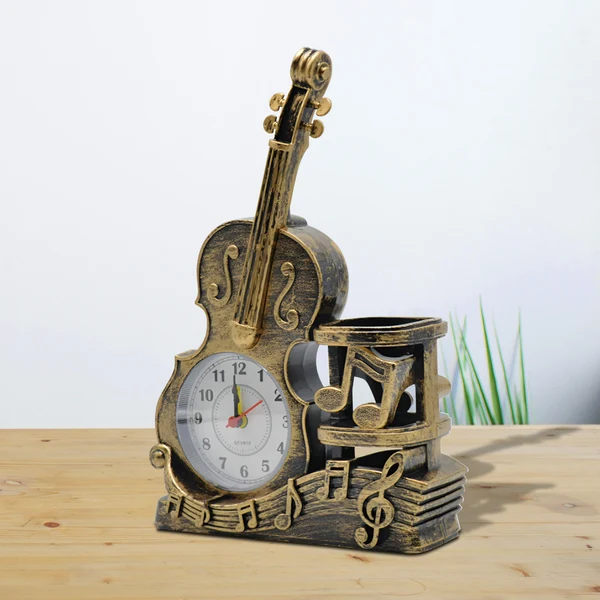
Violin Alarm Clock and Pen Holder, Vintage Analogue Desk Decor
£16.99 incl. VATStart with the type that fits.
Every brand in this category
How to choose
- Recording clarity: A compact condenser or clip-on lavalier microphone captures natural string phrasing for remote lessons and self-review.
- Instrument sizing and scale length: Check arm length for fractional violins or choose full-size setups for adult learners and advancing players.
- Quiet practice and monitoring: Wired noise-isolating earphones and practice mutes help musicians rehearse clearly without disturbing neighbours.
- Match colour and finish to what you already own so anything new fits in.
- Think about how often it will be used: daily use calls for sturdier construction than occasional use.
Frequently asked questions
How do I choose between a carbon fibre bow and a wooden violin bow?
Carbon fibre resists humidity shifts and everyday knocks well, whereas wooden bows are favoured by players seeking a warm traditional response.
Why should I loosen a violin bow after every practice session?
Releasing tension keeps the stick camber straight and stops the horsehair from stretching prematurely.
Where do I start if I am new to violins?
If you are new to violins, start with a versatile, all-round type in a material that is easy to care for, then add more specialised types once you know what you use.